


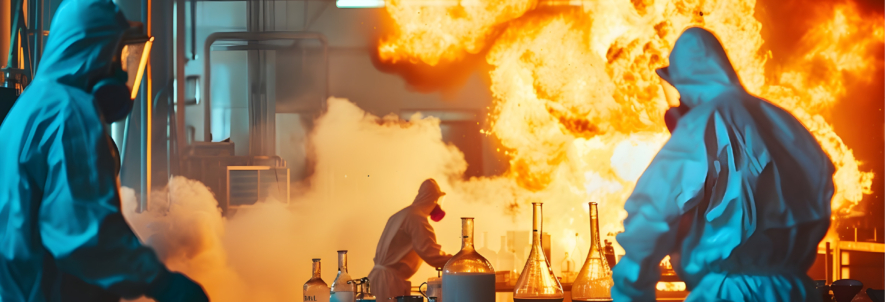
Addressing Dual Hazards in the Oil and Gas Industry
The oil and gas sector is one of the most demanding work environments in the world. Employees routinely work around flammable vapors, hydrocarbons, corrosive chemicals, pressurized systems, and hot equipment.
In many situations, these hazards exist at the same time. That creates a serious challenge for employers: how do you protect workers from both chemical exposure and flash fire risks during the same task?
The answer often involves layered protection strategies, including properly selected personal protective equipment (PPE). In particular, secondary flame-resistant protective clothing has become an important solution for workplaces where both fire and chemical hazards are present.
This article explains the importance of dual-hazard PPE in oil and gas operations, common tasks that require additional protection, and how employers can evaluate and select the right garments.
Why Dual-Hazard Protection Matters
Workplace burn injuries remain a significant concern across industries. According to the U.S. Bureau of Labor Statistic’s Survey of Occupational Injuries and Illnesses, chemical burns accounted for 7,480 nonfatal occupational injuries involving days away from work in 2021–2022. During the same reporting period, there were 25,430 nonfatal thermal burn cases, including 1,650 incidents tied to explosions or fires caused by ignited vapors, gases, or liquids.
These numbers show the real-world impact of burn hazards and why employers must take proactive steps to protect workers.
Burn injuries also create long recovery periods and major medical costs. Data from the American Burn Association National Burn Repository reported that the average hospital stay for burn patients is nine to ten days. Research published in the Journal of Burn Care & Research estimated treatment costs at approximately $9,000 per day.
For oil and gas employers, the cost of a serious incident can include lost productivity, regulatory penalties, workers’ compensation expenses, and long-term health consequences for employees.
Understanding Dual Hazards in Oil and Gas
Workers in oil and gas operations may be exposed to:
- Flammable organic solvents
- Hydrocarbons
- Volatile gases
- Chemical splashes
- Hot surfaces
- Ignition sources
- Pressurized equipment releases
These conditions can create two simultaneous dangers:
- Chemical contact exposure from liquids, mists, or contaminants
- Thermal injury risk from flash fires or explosions
Historically, when dual-hazard protective clothing was not available, many facilities used conventional chemical protective outerwear over top of primary flame-resistant clothing when chemical exposure was considered the larger threat. While that approach may have reduced splash exposure, chemical suits (non-FR) were not designed to resist ignition or limit burn injury during a flash fire.
That meant workers could be wearing chemical protection that actually increased thermal injury risk. Today, newer secondary flame-resistant garments help solve that problem by offering both chemical and FR protection when worn over primary FR apparel.
What Is Secondary Flame-Resistant Protective Clothing?
Industrial flame-resistant clothing generally falls into two categories:
Primary Flame-Resistant Garments
Primary FR garments are designed mainly to protect workers from arc flash, flash fire, and thermal hazards. These garments are often worn as daily workwear in oil and gas environments.
Examples include:
- FR coveralls
- FR shirts
- FR pants
- FR base layers
Secondary Flame-Resistant Garments
Secondary FR garments are designed to be worn over primary FR clothing, typically in multi-hazard work environments. These garments not only protect the more expensive primary FR gear underneath, but they also enhance protection against hazards such as:
- Liquid chemical splash
- Dirt and grime
- Fine particulates
- Process contamination
At the same time, these garments should not increase burn injury severity if a flash fire occurs. This layered approach allows companies to protect workers from multiple hazards without sacrificing core flame-resistant protection.
Common Oil and Gas Tasks That May Require Secondary FR Clothing
Many routine tasks in oil and gas operations can involve both chemical and flammable risks.
Examples include:
- Line breaks
- Product transfers
- Loading and unloading (chemicals, fuels, lubricants, solvents, etc.)
- Sampling operations
- Bagging and drumming
- Cleaning processes
- Equipment maintenance
- Tank access work
- Emergency response activities
During these tasks, workers may be exposed to splashes, leaks, residue, or airborne contaminants while still operating in a potentially flammable atmosphere. That makes garment selection especially important.
OSHA Hazard Assessment Requirements
Under OSHA 1910.132 – General Requirements, employers must assess the workplace to determine whether hazards are present—or likely to be present—that require PPE.
A proper hazard assessment should evaluate or include:
- The hazardous substances being handled and their properties
- The task being performed and the expected environmental conditions
- Frequency and duration of exposure
- Potential ignition sources
- The likelihood of injury or exposure
- The severity of possible injury
- Existing controls in place
- The need to develop and implement new exposure controls
- Historical incident data
- Consulting with safety experts
- Worker input and observations
OSHA also requires that hazard assessments be documented and certified where applicable. Without a formal assessment, employers may overlook combined risks and select PPE that addresses only one hazard while leaving another uncontrolled.
Using the Hierarchy of Controls
The National Institute for Occupational Safety and Health (NIOSH) promotes the Hierarchy of Controls as the preferred framework for managing occupational risk.
The five levels include:
- Elimination – If possible, eliminate / remove the hazard entirely
- Substitution – Replace with a safer material or process (non-hazardous or less hazardous alternative)
- Engineering Controls – Physically alter the workplace to reduce exposure (barriers, machine guarding, ventilation, etc.)
- Administrative Controls – Change procedures or work practices to reduce risk
- PPE – PPE is considered the last line of defense against hazards. All other actions above should be addressed first, before PPE selection or use.
PPE is considered the last line of defense, but in oil and gas environments it is often essential because many hazards cannot be fully eliminated.
Even with excellent engineering controls, workers may still need flame-resistant clothing, chemical splash protection, gloves, eye protection, and respiratory equipment depending on the task.
How to Select the Right Dual-Hazard or Multi-Hazard PPE
Choosing the best protective clothing requires more than simply buying coveralls. Safety teams should evaluate several factors.
- Protection Performance
The garment should provide the level of splash, particulate, or contamination resistance needed for the task while remaining compatible with primary FR clothing and layering.
Review and consider the following:
- Chemical resistance data
- Permeation testing
- Particle barrier performance
- Flame resistance properties and testing
- Comfort and Mobility
Workers are more likely to wear PPE correctly when it fits well and does not restrict movement. Restrictive or uncomfortable garments may reduce compliance. Remember, secondary FR garments should never be worn alone. They should always be worn over top of primary FR garments—a “layered” approach.
- Durability
Oil and gas work is physically demanding. Garments should withstand abrasion, movement, and field conditions.
- Compliance
Verify alignment with relevant regulations and standards, including OSHA PPE requirements and applicable FR garment performance standards.
- Layering Compatibility
Consider secondary FR garments that are manufactured using ANSI/ISEA sizing standards. These regulations standardize sizing specifically to ensure that garments worn over top of clothing fit properly to reduce risks or exposure from a poor fit.
- Other Considerations | Anti-Static Garments
Many oil and gas environments face numerous explosion risks across confined spaces, compressed gases, pressurized equipment, poor ventilation, tank venting, electrical equipment, chemical reactions, and much more.
This is where anti-static garments play a significant role in worker safety. Garments with anti-static fabric are designed to dissipate static electricity before it becomes a spark in hazardous environments. This prevents electrostatic discharge, or ESD, in explosion-risk environments.
Consider multi-hazard garments that are also anti-static. Garments that are certified to BS EN 1149-5 meet the safety requirements for Electrostatic Discharge (ESD) for both static decay and surface resistivity. These garments are therefore considered safe for use in ESD-sensitive applications and in areas where there is a risk of explosion.
Protecting Workers and Preserving Primary FR Clothing
Another practical benefit of secondary garments is extending the life of more expensive primary FR workwear.
Outer protective layers can shield core FR garments from:
- Oil residue and grease
- Paints and coatings
- Dust and particulates
- Sludge
- Mud and dirt
- Non-hazardous grime
That can help reduce laundering frequency, replacement costs, and wear-related damage.
Why Safety Managers Need a Dual-Hazard Strategy
Oil and gas facilities cannot afford to choose between chemical protection and flame resistance. Workers often face both hazards simultaneously, especially during maintenance, transfer, and process-intervention tasks.
A strong PPE program should include:
- Documented hazard assessments
- Task-based garment selection
- Employee training
- Garment inspection procedures
- Replacement schedules
- Layered protection planning
When properly implemented, secondary flame-resistant clothing can be an effective part of that strategy.
Final Thoughts
The oil and gas industry presents unique safety challenges because chemical exposure and fire hazards often overlap. Standard PPE may not be enough when multiple risks exist at once.
Secondary flame-resistant garments help bridge the gap by adding chemical or particulate protection over primary FR clothing without compromising thermal protection.
With burn injuries still affecting thousands of workers annually, and treatment costs reaching thousands of dollars per day, investing in the right PPE is both a safety priority and a sound business decision.
Employers that combine hazard assessments, hierarchy-of-controls planning, and well-chosen protective apparel can better safeguard workers in some of the toughest environments in industry.
Sources / References
- U.S. Bureau of Labor Statistics. Survey of Occupational Injuries and Illnesses Data: Table R31.
- American Burn Association. National Burn Repository 2019, Version 14.0.
- Journal of Burn Care & Research, Volume 46, Issue Supplement_1, March/April 2025, Page S187. https://doi.org/10.1093/jbcr/iraf019.242
- OSHA 1910 Subpart I – Personal Protective Equipment. 1910.132 General Requirements.
- NIOSH. About Hierarchy of Controls.
- AIHA FR Assessment Tool.
Occupational Health & Safety. “Tackling Dual Hazards in the Oil & Gas Industry,” June 6, 2025.